

WHY?
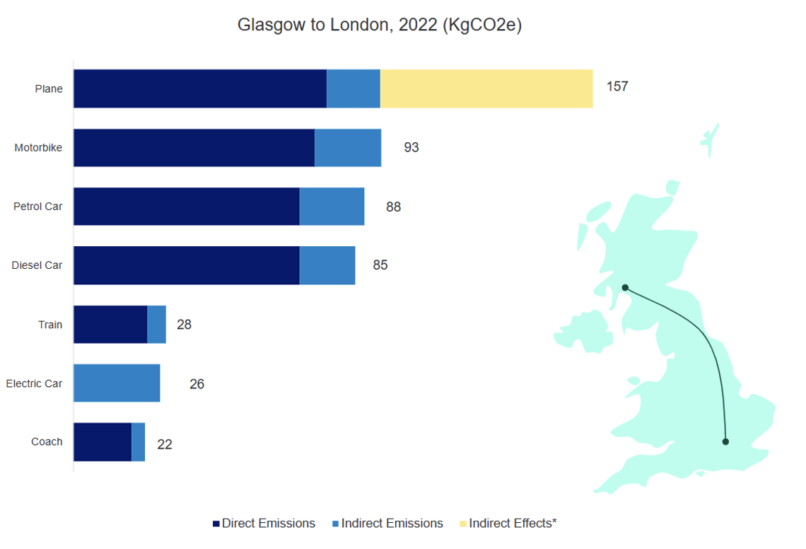
The mechanised vehicles in which we travel all require power for manufacture and use, and much still derives from fossil fuel use. The transport sector alone accounted for 8 billion tonnes CO2e emissions in 2022, or 14% of all emissions worldwide and 24% of the UK’s total emissions in 2020 (406 MtCO2e).
Encouraging more active and carbon light travel creates co-benefits that improve public health, including:
- Reduced disease risk: regular walking or cycling lowers the risk of cardiovascular disease, type 2 diabetes, stroke, and many cancers. It also helps maintain a healthy body weight and reduces the risk of obesity.
- Improved mental health and focus: physical activity releases endorphins that reduce stress, anxiety and depression while improving mood, energy levels and attention.
- Cleaner Air: reducing vehicle use leads to lower levels of nitrogen dioxide and particulate matter, improving local air quality and reducing respiratory and cardiovascular conditions.
These also reduce demand on healthcare services and lead to savings. The Sustrans Report 2023 cited savings of £53.6 million for the NHS in Scotland’s eight cities and 4,251 serious long term health conditions prevented.
HOW?
Develop a transport policy which encourages active travel and transport which uses the lowest carbon possible.
For your organisation:
- Ensure places of work can be commuted to using public transport.
- Minimise face-to-face board meetings which involve travel.
- When booking venues for conferences or meetings, ensure that they are accessible for attendees via public transport.
- Ban the use of internal UK flights.
- Encourage the use of Eurostar/rail for continental meetings.
- Support bike-to-work schemes.
- Ensure that flying is only used where there are no other options. Where flights are taken, ensure these are economy class as these have a lower carbon footprint.
- Support work from home (particularly where power and heating is from 100% renewable resources).
For members:
- Encourage members to prioritise active transport and low carbon travel for every aspect of their lives.