
8th December 2025
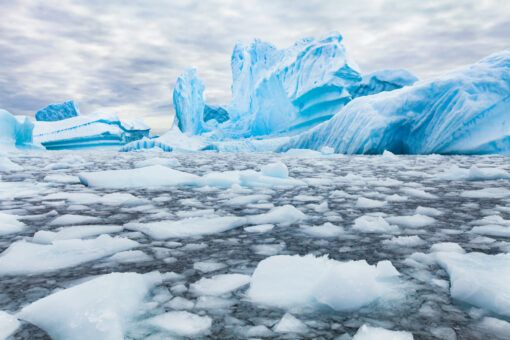
Climate change in Earth’s polar regions may sound like a distant crisis, but a new review of research published in the journal Ambio finds that changing polar regions are an under-recognised driver of global health risks, with consequences reaching far beyond the Arctic and Antarctic.
The review highlights how melting ice sheets, rising sea levels, and shifting weather patterns can have complex consequences for global health and healthcare systems – including those in the UK.
As polar change drives more frequent floods, heatwaves, and sea-level rise, the UK faces higher risks of injuries, water contamination, and displacement, alongside increased heat- and cold-related illness, cardiovascular and respiratory stress, and shifting patterns of infectious diseases.
With health issues from disease burden to health infrastructure and food insecurity at stake, polar climate change is not just an environmental issue, but a global health emergency.
The international team of researchers, led by Professor Gail Whiteman from the University of Exeter Business School, reviewed a wide range of scientific literature across climate and polar science, public health and other fields, and found that current health impact assessment models underestimate the direct and indirect impacts of changing polar regions on global health issues – from chronic disease to mental health challenges, and pregnancy complications.
The study calls for the urgent integration of polar-driven health risks into health impact assessments and healthcare resilience planning and calls for interdisciplinary collaboration to ensure healthcare systems – globally and regionally – are prepared to meet future challenges to health and healthcare.
What’s Changing at the Poles?
The polar regions are warming up to an average rate of approximately 4x faster than the global average. This accelerated change is likely to trigger feedback loops and tipping cascades, reshaping global health risks in complicated and interlinked ways.
Why It Matters for Health
As rising temperatures weaken the jet stream and disrupt ocean currents, extreme weather is expected to drive up rates of severe injury, fatalities, and mental health disorders around the world.
A seasonally ice-free Arctic is likely to contribute to a rise in the frequency and severity of El Niño episodes, worsening heatwaves, especially in tropical areas. Rising temperatures are expected to increase chronic diseases including kidney and cardiovascular disease.
Sea level rise, driven by ice-sheet melt, could increase the salinity of ground water, and contaminate drinking water – potentially leading to increases in pre-eclampsia in pregnancy, infant mortality, and various types of cancer.
Polar warming could affect agricultural productivity indirectly– via disrupted precipitation and temperature patterns – increasing rates of malnutrition-related disease.
Meanwhile, the warming climate is pushing insect and animal-borne diseases such as vibriosis, dengue fever, and Lyme disease into northern regions previously unaffected.
Flooding, intensified by polar ice melt, is increasing the spread of waterborne diseases such as cholera and typhoid, while also exacerbating respiratory conditions.
In the Arctic itself, melting permafrost and sea ice threaten vital infrastructure and risk releasing long-trapped pollutants, and even ancient pathogens, such as the 1918 influenza virus.
The study also highlights the risks to traditional Arctic food sources due to ocean ecosystem changes, contributing to rising rates of malnutrition, miscarriages, kidney failure, and cardiovascular disease among Arctic communities already facing fragile healthcare systems.
What needs to happen
The new framework proposed by the researchers sets out the link between polar physical changes, and direct and indirect, regional and global health risks, and calls for greater integration of the health risks amplified by physical polar changes into human health impact assessments.
Ignoring these potential drivers of disease and death is not an option. We need stronger international collaboration between climate scientists, health professionals, and data experts to prevent harm and prepare our systems for the challenges ahead.
For UK health professions and policymakers, this means:
- Advocating for climate-health integration in national policy – like the NHS Long Term Plan and public health frameworks
- Supporting research on emerging health risks linked to polar and climate change
- Embedding resilience in healthcare systems – preparing for extreme weather, disease spread, and infrastructure stress
Further Information
The study forms part of a research project conducted jointly by the University of Exeter, Arctic Basecamp and the World Economic Forum that looks at the effects of polar climate change on global health and healthcare by building new impact assessment tools. The “Effects of Polar Climate Change on Global Health and Healthcare” project, funded by the Wellcome Trust, aims to highlight the under-reported risks posed by polar tipping points to global health and the healthcare sector.
It will enrich existing climate health analyses to support the creation of resilience strategies for the most vulnerable regions by taking into account the impact of polar tipping points.
“A framework for assessing global health impacts of polar change: An urgent call for interdisciplinary research” is published in Ambio: A Journal of Environment and Society.
This post reflects the views of the authors and not necessarily those of the UK Health Alliance on Climate Change.